Wheber, our host teacher, picked us up from the Hotel at 6:55am. It turns out he carpools in the morning with his wife, who is a Biology teacher at a high school located directly across from the hotel. After meeting his wife, Beatriz, Adrian and I headed to Wheber’s high school, located roughly 10 minutes from the Hotel.
The high school is located in a four story building with minimal facilities for sports programs or physical education. The high schools in Brazil have Grades 10, 11, and 12—and this school is no different. Similar to other high schools in Brazil, there is a morning session, afternoon session, and evening session. Each period lasts roughly 55 minutes. If students enroll in the morning sessions, they are able to work in the afternoons or evenings—or vice versa. Students take roughly 12 subjects during those three years of high school—and high school students that wish to attend a competitive university must take a National Exam covering all 12 subjects at the end of their high school career. In the Social Sciences, for example, students take Philosophy, Geography, Sociology, and History.
In comparison to most American schools [and specifically, my school, Santee Education Complex, which is located in a high poverty neighborhood and all students qualify for the free breakfast program and lunch program], Wheber’s school lacks many of the basic resources that American students and teachers tend to take for granted. The recent economic crisis has led the state and federal governments to make severe educational cutbacks that is impacting the ability of teachers to deliver quality instruction.
Upon arrival to Wheber’s school, we met a variety of teachers, coordinators, and administrators. After a short roundtable discussion with several teachers, Adrian and I gave presentations to three different periods. Each presentation lasted roughly 50 minutes, and Adrian and I divided the time between us. Our host teacher for the day also possessed an LCD project, so I was able to lead my component of the presentation with my Prezi presentation. For the three periods Adrian and I focused on the American educational system, with our own schools as case studies. Aside from our general overview of the American educational system, we also answered general questions about American society and American history. The majority of the students reacted favorably to our presentations. They were attentive, seemed fully engaged, asked myriad basic questions as well as more in depth and more critical questions, and in general responded positively.
After the end of each period, many of the students individually approached Adrian and I to ask more questions, introduce themselves, thank us, or simply to say hello and goodbye one on one. They were enthusiastic and obviously welcomed the opportunity to have two American teachers in their classroom.
Wheber’s morning session school appears to serve a working class and middle class population. According to Wheber, some of these students may have ended up there because they had demonstrated less motivation to push themselves academically.
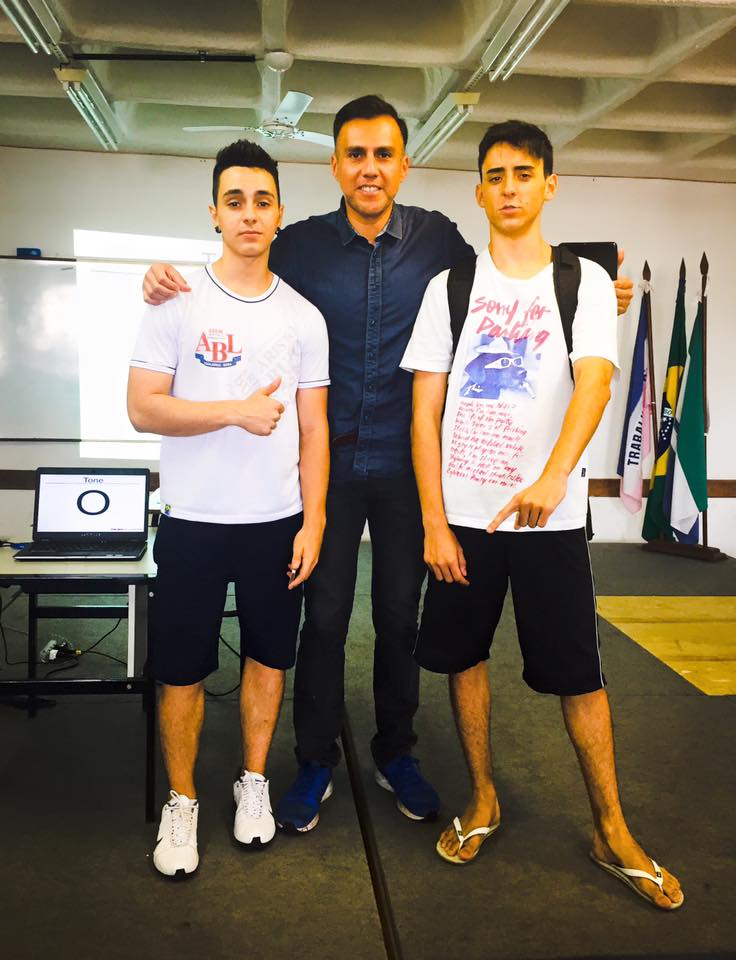
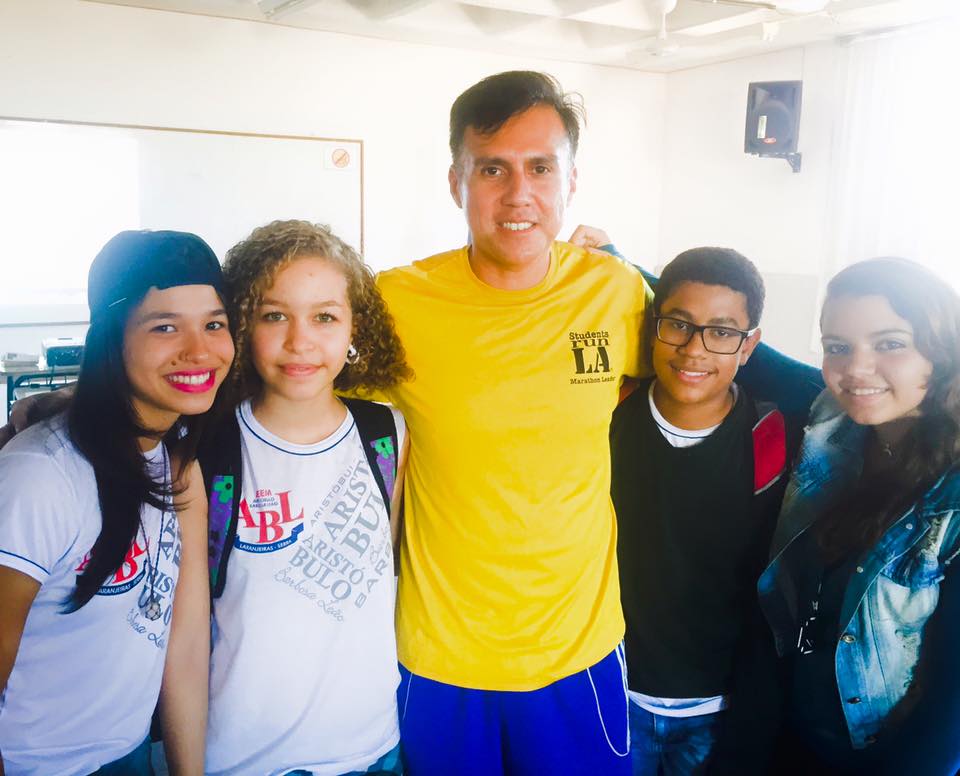
School ended at 11:30 and we then headed to lunch. After lunch, we made our way to Wheber’s second school. This school, located in the neighboring city of Vitoria, is equivalent somewhat to a continuation school or independent studies school in the United States.
At Wheber’s second school, students see their various instructors for assistance and to clear doubts on academic content, submit assignments, and take assessments. On some levels, it is equivalent to one-on-one tutorial sessions. Students range in age from 15 to more mature adults that have been away from the educational system for decades. Wheber’s afternoon session runs from 1 to 6pm.
 Traveling Fern