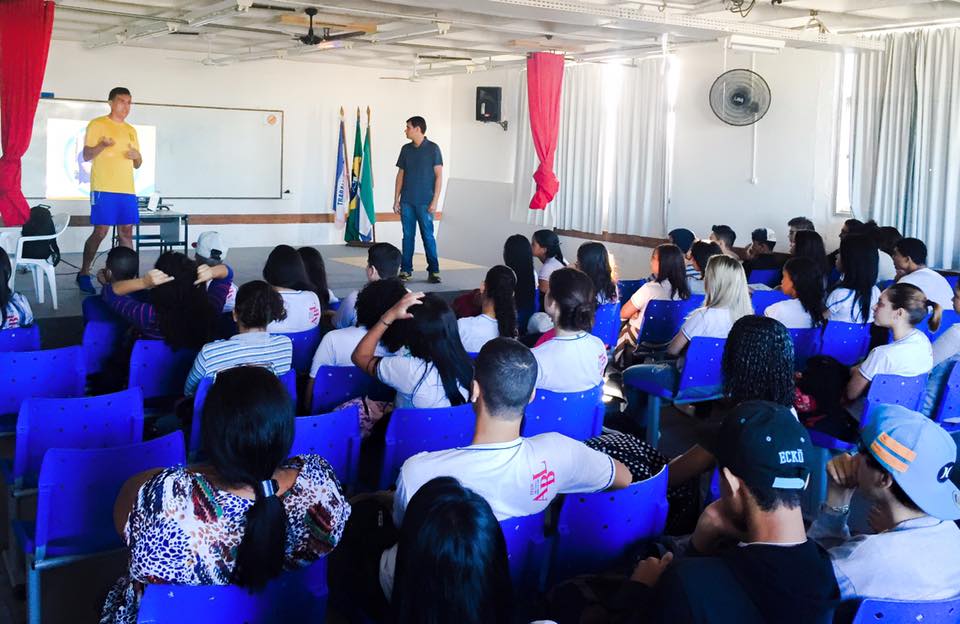
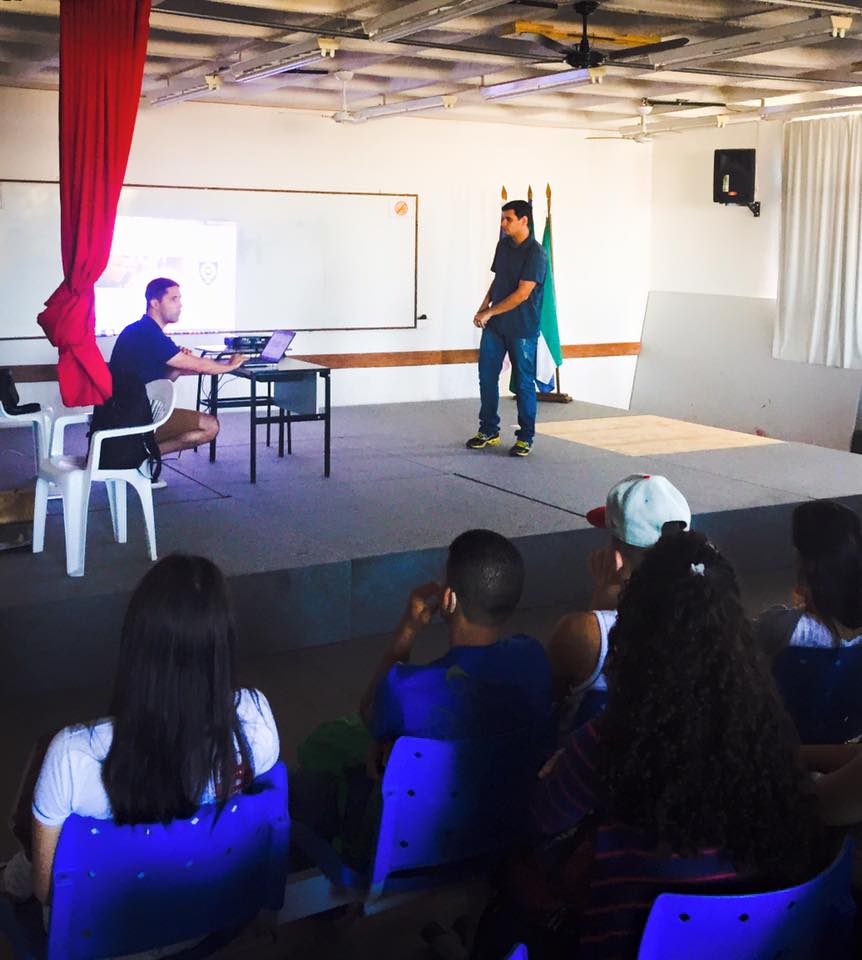
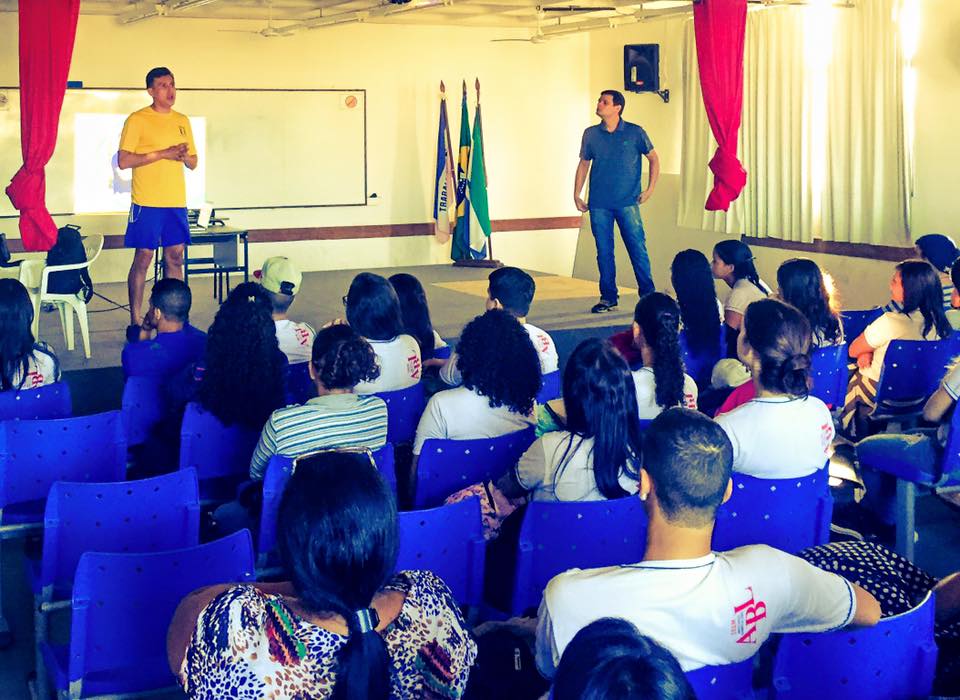
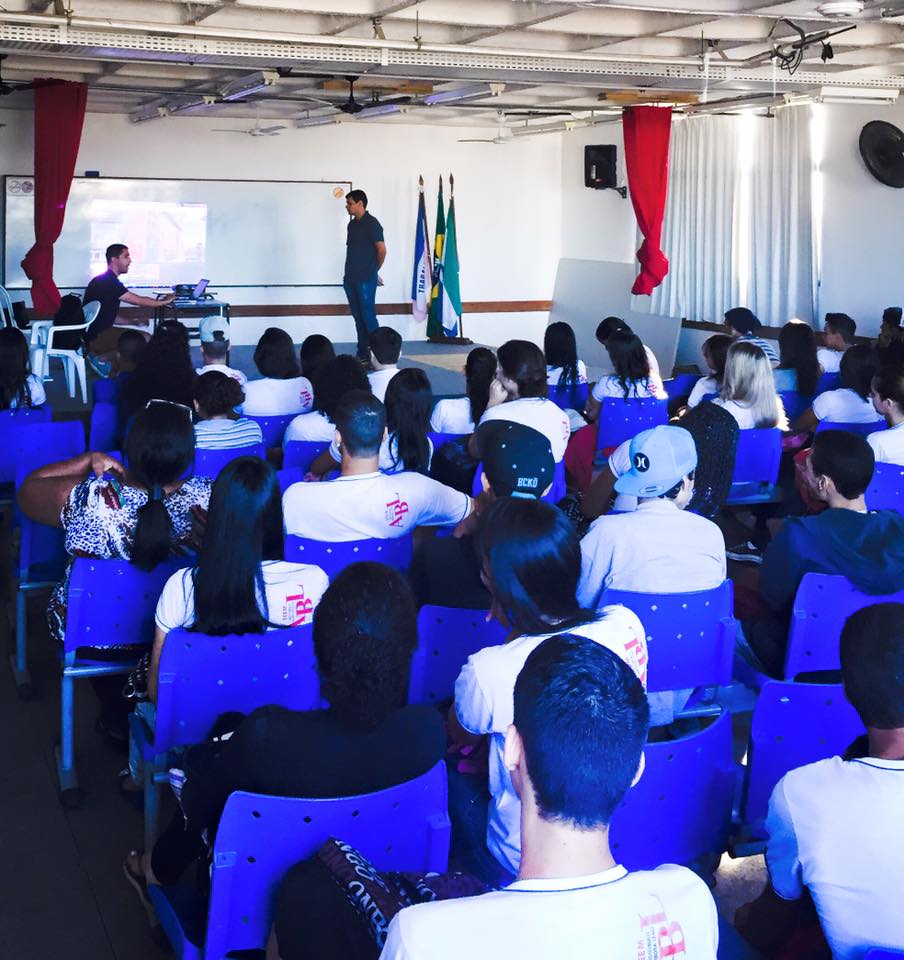
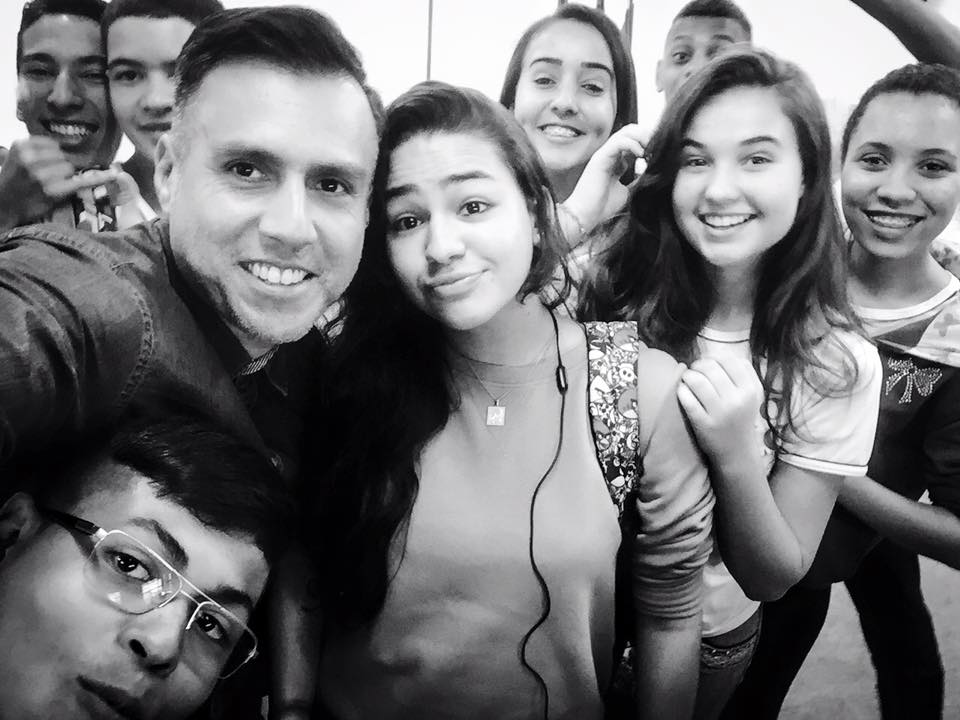
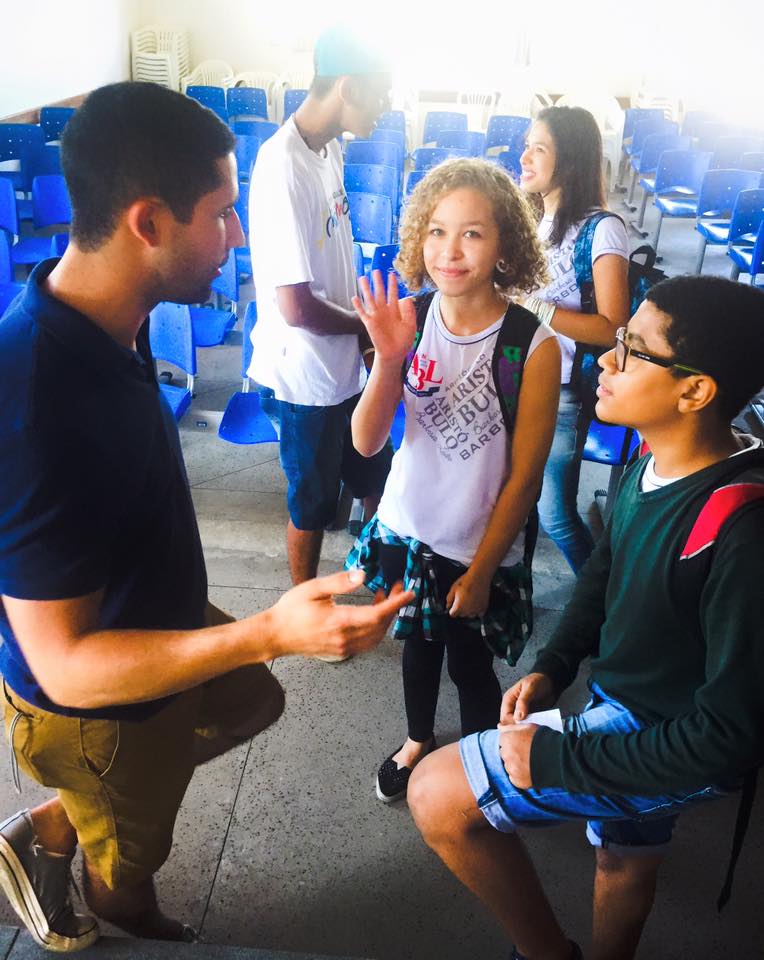
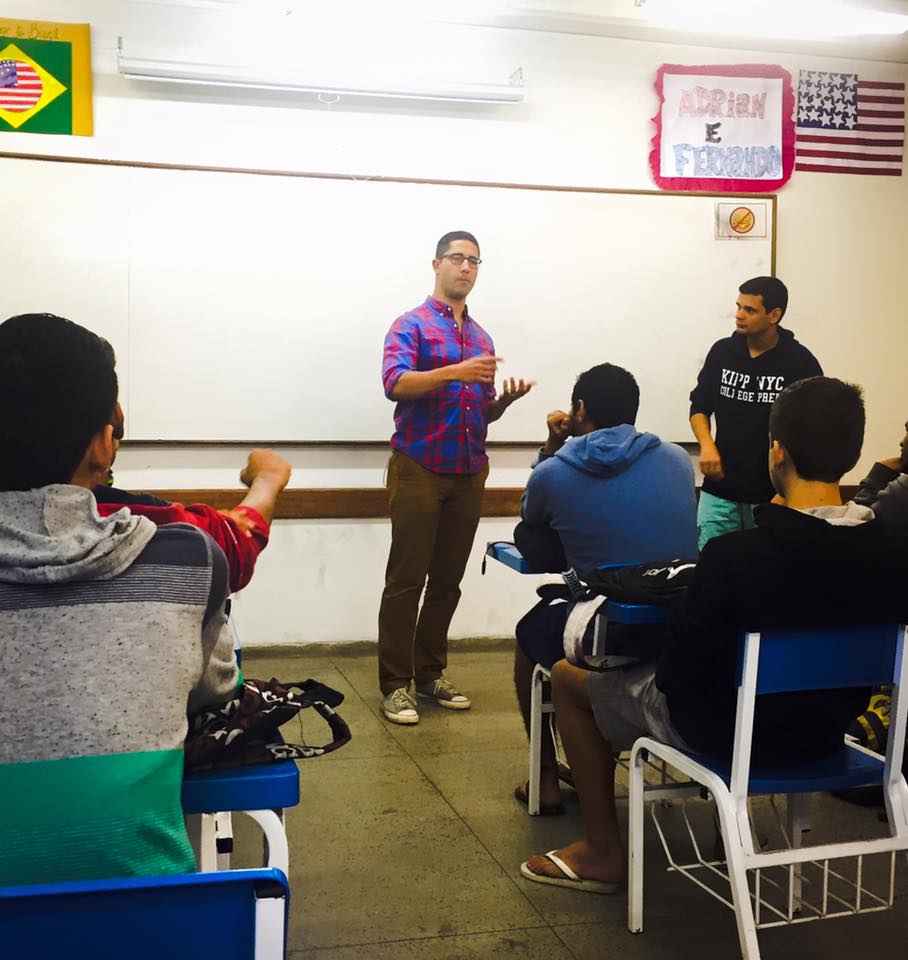
Today, Monday [06/15], we did several presentations with multiple classes in the auditorium. Once again, our presentations focused on the American educational system. We also did a one hour English conversation activity with one period of students. The students were all very active participants in both the presentations and the English conversation activity. One thing that stood out, though, is the inability of most of these students to express themselves orally in English. While they may have studied English for more than one year, they are generally more competent in reading and writing and less competent in their oral language skills. One of the primary reasons for this is the lack of English teachers in Brazil that are fluent in the language. In this season, the ILEP program plays an instrumental role in developing the fluency of Brazilian English teachers—and thus Brazilian students.
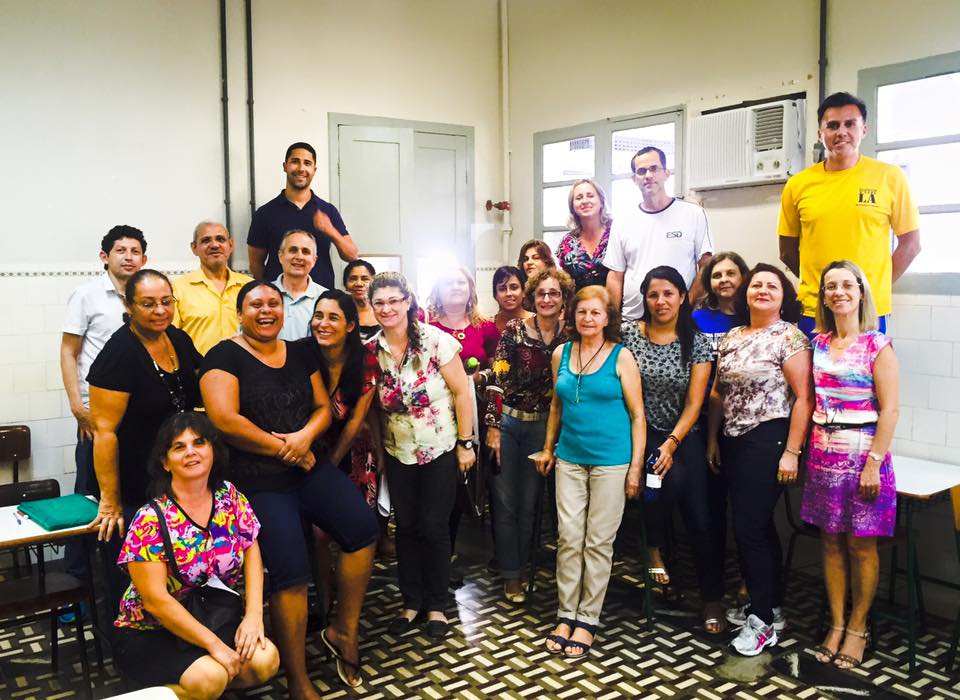
The afternoon session included a lively roundtable discussion on educational policy, curriculum, teacher pay and responsibilities, etc. More than 20 Brazilian teachers were a part of the roundtable discussion, and our host teacher, Wheber, translated for Adrian and I. The Brazilian teachers had myriad questions for Adrian and I. They seemed thoroughly engaged in the roundtable discussion—and they were genuinely interested in learning about the American educational system.
General Observations:
The Brazilian educational system varies greatly—just as the American educational system varies by state—as well as community to community. Schools in poorer neighborhoods tend to have less resources, while schools in wealthier neighborhoods tend to have more resources. In Serra, as in other parts of Brazil, the best schools tend to be private schools.
Teacher Unions possess a great amount of power in Brazil. On the whole, they are very protective of their current status as civil servants, and they resist greatly any changes that might reduce their benefits or increase their workload. This is partly the result of somewhat lower salaries for teachers in the Brazilian public education system.
A concern or question that arose several times over the past week has been the issue of violence directed at teachers from students. It appears that this is somewhat common in Brazil—at least in the more working class communities and schools. Adrian and I explained that this is generally not an issue public school teachers face in the United States.
Brazilian students have asked us to address, on multiple occasions, the issue of racism and segregation in the United States. Their perception of these issues [primarily fueled by popular television and film, as well as news media stories] tends to be somewhat exaggerated. Their perception of the United States is one of deep, systematic segregation based on race. We explained that while the United States continues to deal with issues of race and discrimination, American society on the whole has progressed greatly in the past half a century. Students also brought up the issue of police brutality, and this provided for an even greater, more complex discussion on issues of race and class—both in the United States and Brazil.
Brazilian high schools tend to not have the extensive extracurricular activities, clubs, and sports programs that many comprehensive American high schools possess. Naturally, Brazilian schools provide a space for social interaction, but one will not encounter the plethora of activities and programs that many Americans are familiar with in our secondary school system.
Up to this point, I have thoroughly enjoyed my interaction with Brazilian students and faculty members. The students, in particular, are kind, curious, and extremely welcoming.
More Observations–Outside of the classroom
There exist a racial divide in Brazil, but it is rooted in the disparate economic inequalities that permeate Brazilian society. On the whole, Brazilian society is quite mixed. It is common [and perhaps the norm] to see mixed race families and communities in most of Brazil. Only when one enters an upper middle class establishment, environment or community does one see the racial divide. Today, for example, we had lunch in an upper middle class neighborhood of Vitoria. The great majority of the diners were clearly of European origin—there were few, if any, obviously mixed race or black Brazilians. This racial divide was also evident at the private school we visited in Brasilia. On many levels, this is especially striking for a foreigner or non-Brazilian [such as myself] because a huge part of Brazil is in fact mixed-race and/or of African origin.
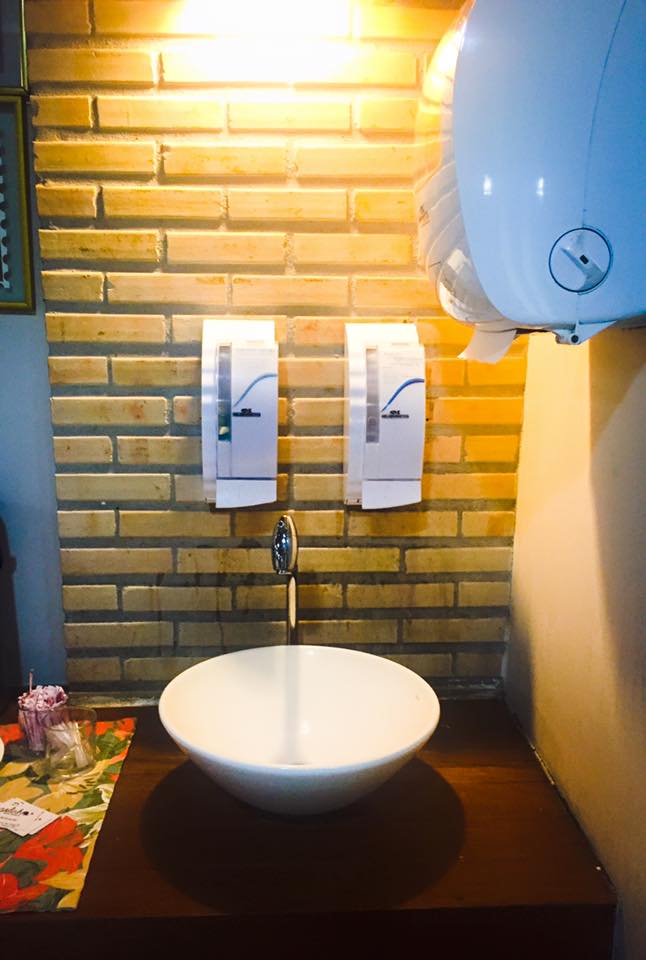
Brazilians love buffets. [And malls!] In contrast to the United States, though, one pays for one’s food at a Brazilian buffet by the weight. After serving oneself, the diner takes one’s plate to a scale, and one’s plate is weighted and recorded. After seating oneself, a server will then come to one’s table to take one’s drink order, and the drinks are then added to one’s tab. Tips are much more rare in Brazilian establishments. In the more high end restaurants—a 10% tip might already be included in the final tab. Oh, and many Brazilian restaurants in this region have a sink, soap, and paper towels available at the very entrance of the restaurant. The sink [washing hand station] is literally the first thing one see’s as one enters the establishment. This gives each customer the opportunity to clean their hands prior to handling their food. This washing hand station is separate from the restroom facilities. According to surveys, Brazilians take more showers than most other peoples of other nations. On average, Brazilians take two showers per day.
 Traveling Fern